Why Lighting Changes Everything
Light does not just illuminate a face, it shapes how every feature appears at the pixel level. A strong directional light from one side creates deep shadows that make the nose appear wider or narrower, the eye sockets deeper or shallower, and the jawline more or less defined. These shadow-induced changes alter the contrast map that the recognition network processes, effectively making the face look geometrically different from a different angle even though the bone structure is identical.
This matters enormously for face recognition accuracy. The network has learned to extract identity from facial geometry, but geometry is perceived through the pattern of light and shadow on the surface. When lighting changes dramatically, the perceived geometry changes too, shifting the facial embedding away from the position it would occupy under controlled conditions.
The Most Problematic Lighting Conditions
Backlighting, a bright window or lamp directly behind the subject, is the most damaging condition. It can reduce the face to a near-silhouette, eliminating detail across the entire face and making feature extraction nearly impossible. Harsh directional flash (particularly the built-in LED flash on smartphones) creates high-contrast flat illumination that eliminates the natural shading cues the network relies on for three-dimensional structure inference.
Coloured ambient light is also problematic. Being illuminated by a green, red, or blue light source shifts skin tone values across the entire image in ways that are far outside the training distribution, confusing the low-level colour features that early convolutional layers extract. Even warm indoor lighting versus cool daylight shifts the colour balance significantly, though modern networks handle this variation reasonably well.
Ideal Lighting for a Facial Recognition Photo
The ideal lighting for any face matching photo is soft, even, and diffuse, providing enough detail to see facial features clearly without creating strong shadows or blown highlights. Overcast outdoor light is excellent: cloud cover acts as a giant softbox, diffusing sunlight evenly across the scene. A north-facing window on a bright day provides similar quality indoors.
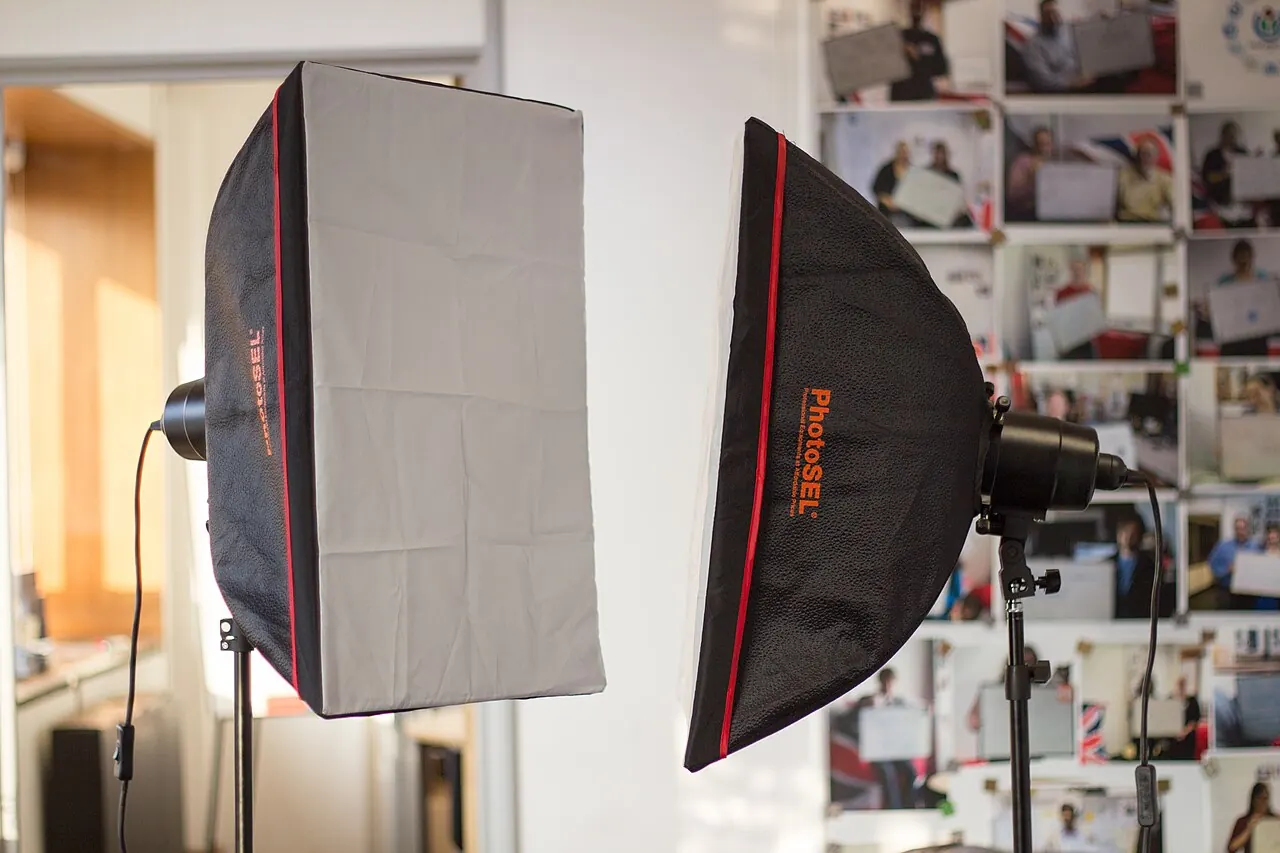
Ring lights, popular for video calls and content creation, work well for this purpose. They provide even frontal illumination at low cost. Softbox arrangements used in portrait photography produce optimal results. The key principle: you want the light to reveal your features clearly on all sides of the face simultaneously, without any region being significantly darker or brighter than the rest.