The Visual Pathway to Face Identity
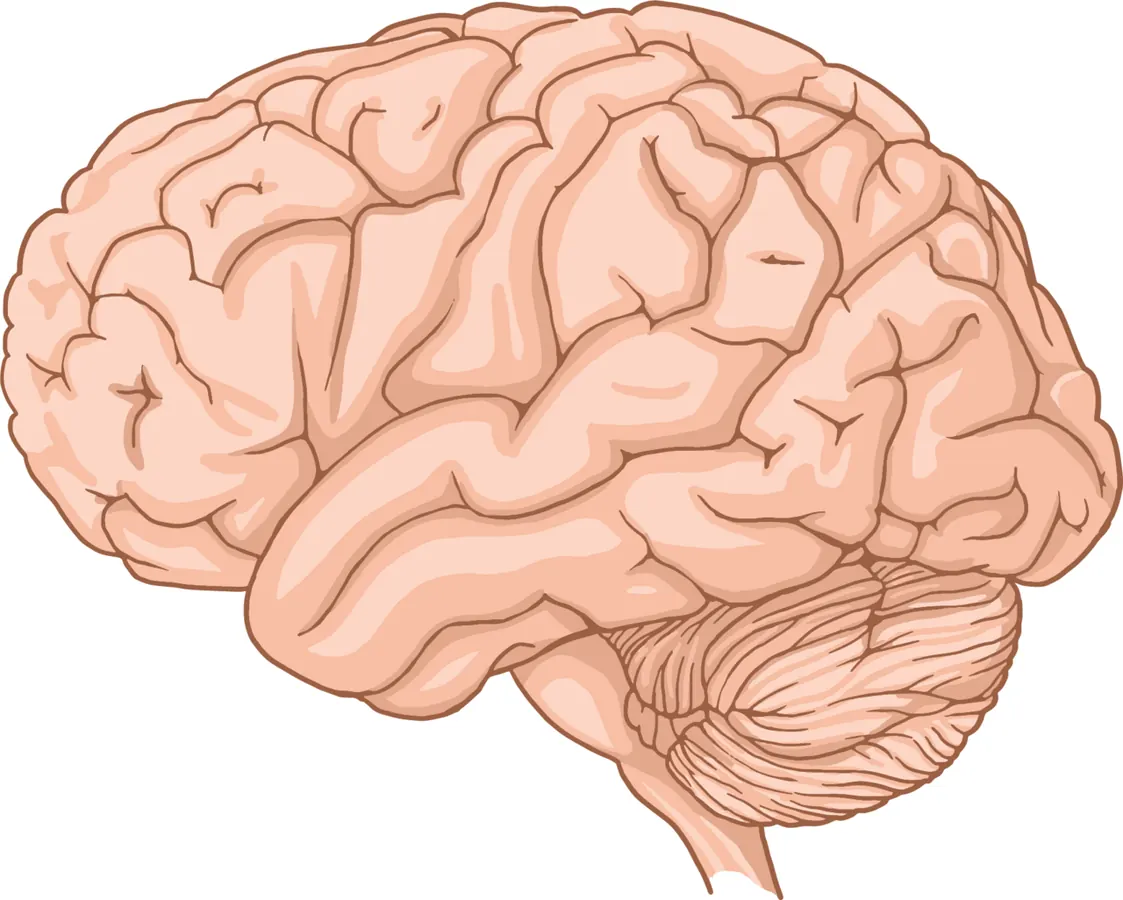
Face recognition begins with light striking the retina, producing a retinotopic map of the visual scene in primary visual cortex (V1) at the back of the brain. From V1, visual processing proceeds along the ventral stream, a pathway running forward through temporal cortex that extracts increasingly complex object and identity information. By the time the signal reaches the inferior temporal lobe, around 150–200 milliseconds after stimulus onset, face-specific processing is fully engaged.
The key station along this pathway is the fusiform face area (FFA) in the fusiform gyrus of the inferior temporal cortex. The FFA shows selective activation for faces over other object categories and responds particularly strongly to upright faces. Damage to this region produces prosopagnosia, the inability to recognise faces despite normal vision.
The N170: A Neural Signature of Face Processing
Electroencephalography (EEG) studies reveal a distinctive electrical brain response to faces called the N170, a negative deflection peaking around 170 milliseconds after a face appears. The N170 is larger for faces than for any other object category, and largest for upright faces. Inverted faces produce a delayed and altered N170, consistent with the difficulty humans have recognising inverted faces compared to upright ones.
The N170 reflects the moment at which the face is structurally encoded, when the brain represents it as a face with specific features in specific spatial relations. This structural encoding precedes identity recognition; the N170 is similar for famous and unfamiliar faces. Identity matching happens in subsequent time windows, around 300–600 milliseconds, when the encoded face structure is compared against stored representations.
What This Tells Us About AI Design
The brain's multi-stage face recognition pipeline, low-level edge detection, structural face encoding, identity matching, is a blueprint that mirrors the architecture of deep convolutional networks used for face recognition. Early CNN layers extract edges (analogous to V1), intermediate layers extract face structure (analogous to FFA), and the final embedding layer represents identity (analogous to the recognition stage). The convergence is striking given that CNNs were not explicitly designed to model the brain.
The parallel suggests both that the CNN architecture has discovered something genuinely efficient about the computational problem, and that studying the brain continues to provide insights into what good face recognition should achieve. The 200-millisecond biological benchmark remains an aspirational target for edge deployment of face recognition on resource-constrained hardware.