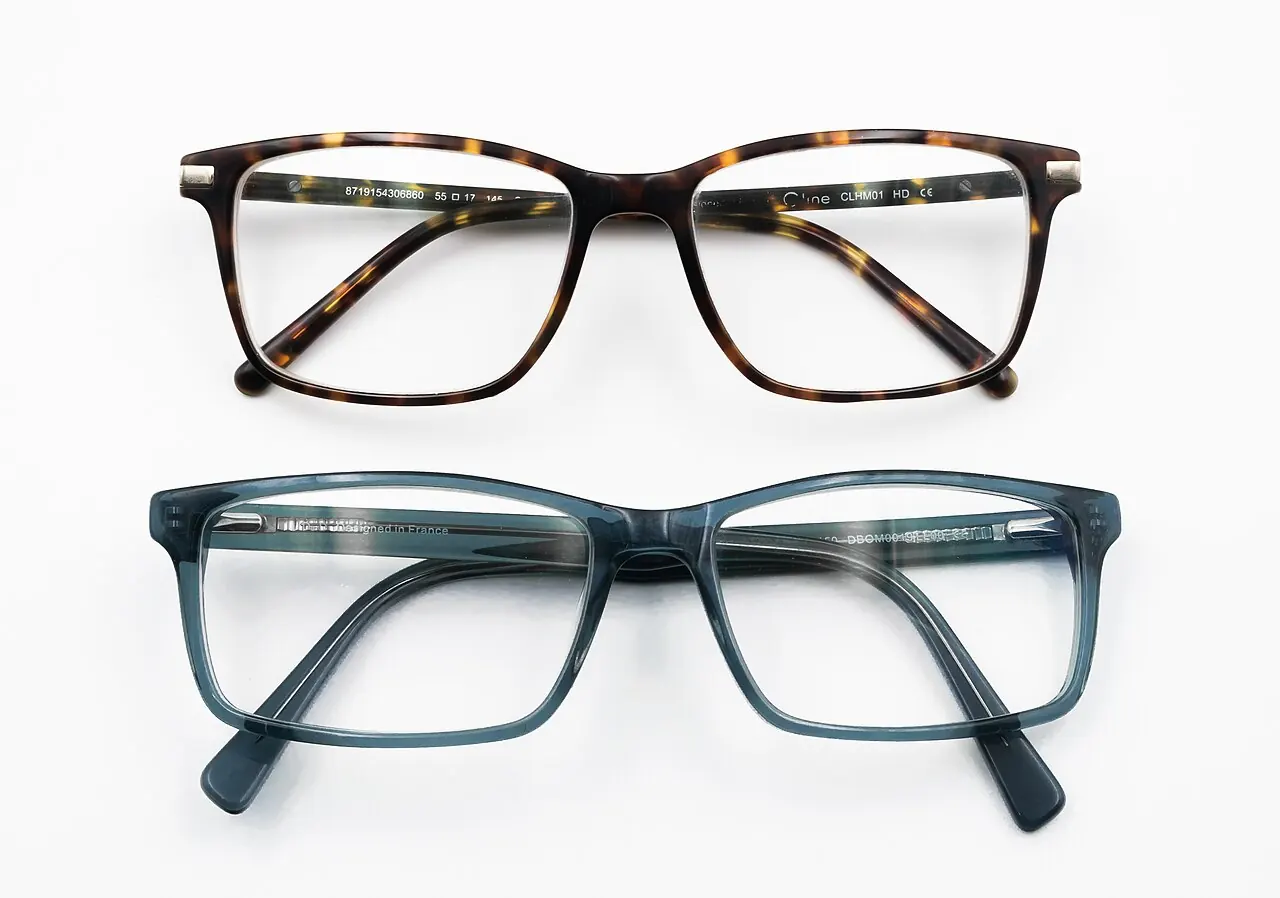
Glasses and the Eye Region
The eye region, including the eyebrows and the upper part of the nose bridge, carries the most diagnostic weight for face identity in both human and machine recognition. Glasses occlude parts of this region, cover the eyebrows in many styles, add reflective artefacts, and alter the apparent size of the eyes and eye socket. These changes affect the most identity-weighted region of the face, degrading embedding accuracy more than accessory effects in other face regions.
Thick-rimmed glasses create strong geometric edges that can be mistaken by early convolutional layers for face structure edges. Highly reflective lenses in photos can create bright patches that the network has limited experience handling. For the most accurate celebrity match, remove glasses if possible. If you prefer to match with glasses on, understand that the result reflects your appearance with that accessory.
Hats and Forehead Occlusion
Hats covering the forehead reduce the available face region for the detection and alignment pipeline. Face detection uses the full face region including the forehead for accurate bounding box fitting and landmark detection. Significant forehead occlusion can cause detection to fail entirely, or can produce a misaligned crop that degrades recognition.
For matching, a hat that covers only the very top of the forehead will have limited effect. A hat pulled down to eyebrow level may cause detection failure. If detection succeeds despite a hat, the forehead occlusion slightly reduces the embedding quality but typically does not dominate the result.
Hair and Overall Face Shape
Hairstyle affects the perceived face silhouette but not the internal face geometry that dominates the embedding. The face detection and alignment pipeline crops to the internal face region, forehead to chin, cheek to cheek, largely excluding the hair region. Hair affects the result less than many users expect.
However, very long hair that falls across the face does affect results, as it occludes parts of the cheek and jaw region used for alignment. Hair swept to one side that creates a strong asymmetry in the face crop can also introduce small embedding shifts. For best results, pull hair back to reveal the full face region.