The 60-Second Mirror Test
Tie or push your hair back so your hairline, temples and jaw are visible. Stand square to a mirror, or take a photo with the back camera from about a metre away; a close front-camera selfie makes the middle of the face look wider than it is. Keep your expression neutral, because a big smile widens the lower face.
Now answer two questions. First: is your face clearly longer than it is wide? Second: where is it widest, at the forehead, the cheekbones or the jaw? Those two answers are enough to place most faces.
Reading Your Answers
Clearly longer than wide, soft jaw: oval. Clearly longer than wide, straight sides and a squarer jaw: oblong. About as wide as long, soft jaw and full cheeks: round. About as wide as long, sharp angular jaw: square.
Widest at the forehead, narrowing to a slim or pointed chin: heart. Widest at the cheekbones, narrower forehead and chin: diamond. Widest at the jaw, narrower forehead: triangle. If you fit two descriptions, you're probably between shapes, which is very common.
Read more: Face Shapes: The 7 Types and How to Tell Yours Apart
The Tape Measure Method
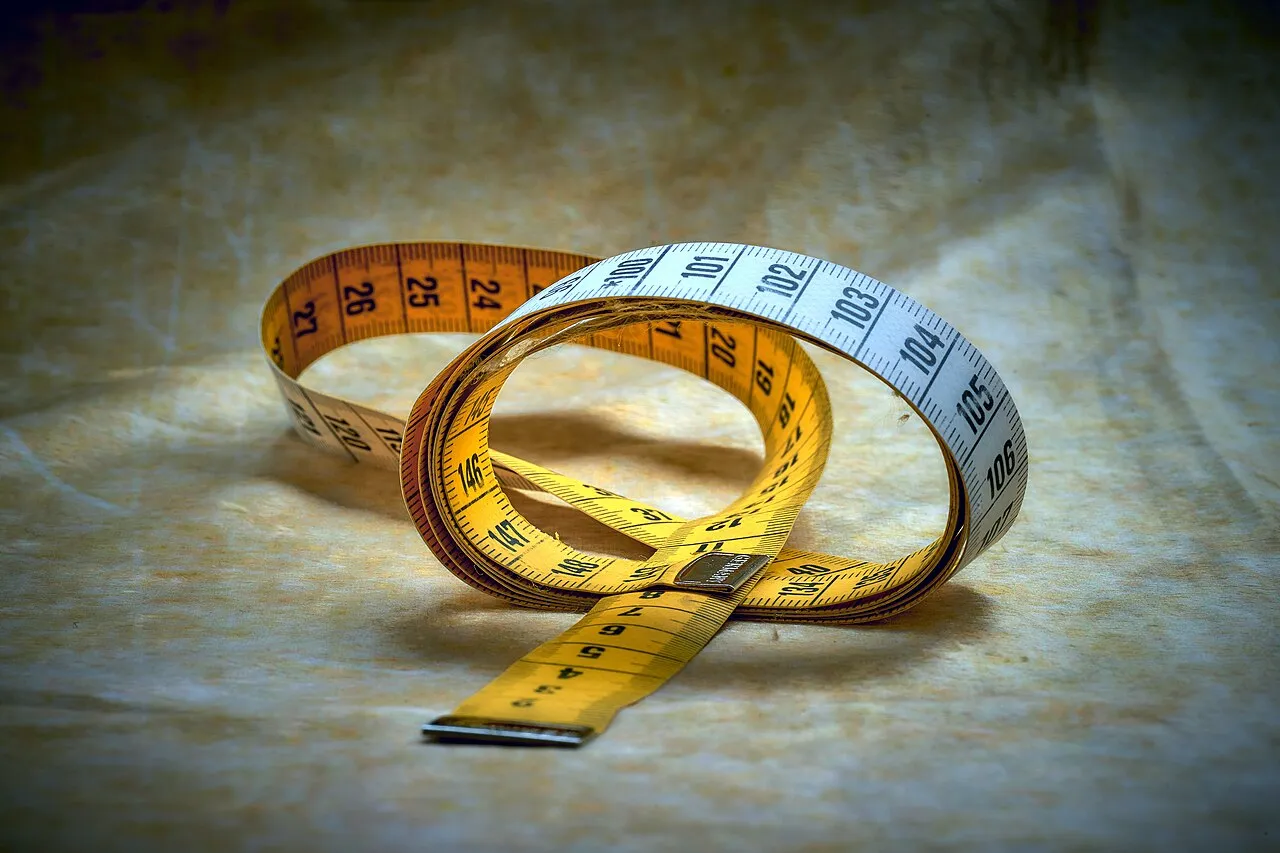
For a firmer answer, use a soft tape measure. Measure four things: face length from the centre of your hairline to the tip of your chin; forehead width across the widest part, usually halfway between eyebrows and hairline; cheekbone width across the high points just below the outer corners of your eyes; and jaw width from the corner of the jaw below one ear to the same point on the other side.
Compare length with cheekbone width. A face about 1.5 times as long as it is wide reads as oval; much longer reads as oblong; close to equal reads as round or square. Then compare the three widths to find the widest point. Measurements from a tape are rarely exact to the millimetre, so look for clear differences rather than tiny ones.
Get new guides by email
Let a Face Scan Measure It
The free face scan in Ollie Stylist does the same job with your camera. It finds 478 points on your face, measures the same four proportions over several straight-on frames, and compares them with norms taken from thousands of real faces. It then tells you how likely each of the 7 shapes is, not just one label, and ranks haircuts, beards and glasses to match. The scan runs entirely in your browser and nothing from it is uploaded.
Why probabilities? When Ollie tested the scan on celebrity photos, the same person's measurements varied photo to photo by about two thirds as much as they varied between different people. In plain terms, one photo can't settle a borderline case, so the best advice is advice that works for the shapes you're closest to.
Read more: Oval vs Round vs Heart Face: How to Spot the Difference
Common Mistakes That Give the Wrong Shape
Hair covering the forehead or jaw hides two of the four measurements. A tilted head shortens or lengthens the face. Smiling widens the jaw. Wide-angle selfies inflate the nose and cheeks. And weight changes soften the jaw, which can make a square face read as round. Check your shape on two or three photos taken on different days before you book a big haircut around it.
Once you know your shape, see the best haircut for each face shape or the full guide to all 7 face shapes.