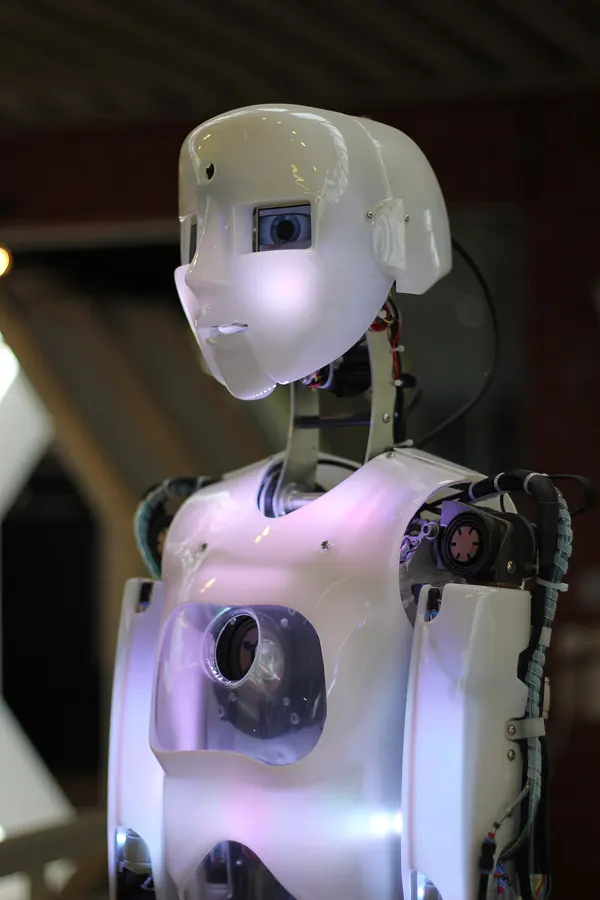
What Is the Uncanny Valley?
The uncanny valley is a concept from robotics introduced by Masahiro Mori in 1970. It describes the relationship between human likeness and the emotional response it produces: as an entity (robot, animation, AI face) becomes more similar to a real human, it becomes more appealing, until it reaches a region of 'near-human' similarity where it becomes distinctly unsettling. The dip in this curve is the uncanny valley.
The phenomenon is well-documented across many domains: early computer-animated films, hyper-realistic humanoid robots, and AI-generated face images. Faces that are very close to realistic but not quite right trigger a specific aversive response, a sense of something being fundamentally wrong, that neither obviously cartoonish nor fully realistic faces produce.
Why Does It Happen?
Several explanations have been proposed. The pathogen avoidance hypothesis suggests the uncanny valley reflects an evolved response to faces showing subtle signs of disease or death, the specific anomalies that near-perfect artificial faces display (wrong micro-expressions, static gaze, or incorrect skin texture) may trigger the same cues that signal illness in a real person.
The violated expectation hypothesis proposes that near-human faces set up a strong expectation of full human behaviour and expression, which the artificial face fails to meet. The gap between expectation and reality is larger than for an obviously artificial entity (like a cartoon character) that sets up no such expectation. The closer the approach to human likeness, the higher the bar set and the more jarring the failure.
Relevance to AI-Generated Faces
Modern AI face generation models (diffusion models, GANs) produce faces that fall squarely into the uncanny valley in many cases. Human observers can identify AI-generated faces significantly above chance even when they cannot articulate what is wrong, they report a general sense of incorrectness. Face recognition models, however, cannot reliably detect AI-generated faces using their standard embedding architecture: the embedding was optimised for identity similarity, not for detecting generation artefacts.
Dedicated AI face detection models are trained specifically to identify generation signatures, texture anomalies, frequency domain artefacts, and other traces of the generation process. These are a distinct capability from face recognition and require separate system design.